You spent your entire Saturday morning planting, but by Sunday afternoon, your wrists are throbbing and your discount shears are stuck halfway through a rose bush. Bargain shopping feels great at the cash register, but the true cost of cheap tools usually shows up later as painful blisters and snapped handles. Common knowledge among seasoned landscapers is that poor equipment forces you to work twice as hard for half the result.
Learning how to maintain a garden shouldn’t require a bottle of ibuprofen. Every time you swing a heavy, poorly balanced shovel, the physical impact travels straight up your arms and settles into your joints. That is why choosing ergonomic garden hand tools for seniors—and everyday hobbyists of all ages—is fundamentally about protecting your physical health. According to physical therapists, tools designed to work with your body’s natural grip drastically reduce daily strain on your back and knees.
Overwhelmed by the endless hardware aisle, many beginners end up buying shiny gadgets they never actually use. Instead of a cluttered shed full of rusty gimmicks, adopting the “Essential Five” philosophy strips your collection down to just a handful of high-quality, durable basics. Think of a garden trowel, for instance, exactly like a sturdy soup ladle for dirt; its primary job is just to dig small holes where a full-sized shovel simply will not fit.
Mastering the tools every gardener needs for maintenance comes down to buying the right metals once, rather than the wrong plastics twice. Demystifying the hardware aisle ensures your gear feels like a comfortable extension of your hand. Ultimately, the goal is more flowers and less backache.
Digging Without the Backache: Hand Trowels vs. Transplanters
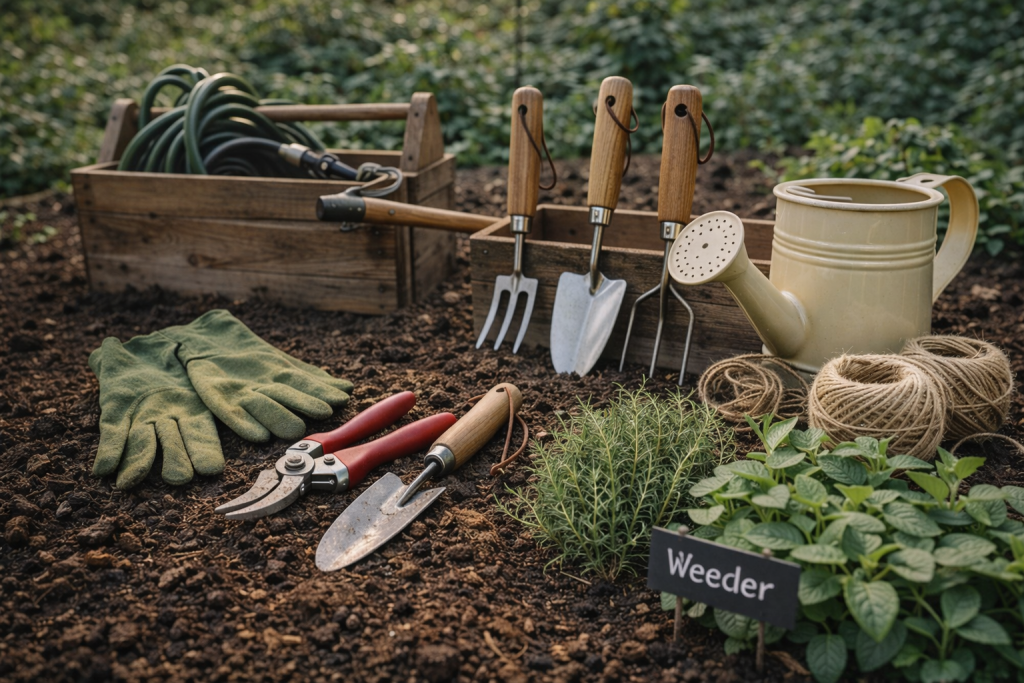
Scooping ice cream with a flimsy plastic spoon usually ends with it snapping in half. That same frustration happens when you ignore the differences between a hand trowel and a transplanter. It comes down to blade geometry—the physical shape of the scooper. A standard trowel is wide like a soup ladle, perfect for moving loose soil into large pots. A transplanter features a narrow blade with built-in depth markers, taking the guesswork out of planting bulbs at exactly the right level.
The metal itself matters just as much as the shape. Avoid “stamped” metal tools, which are punched from thin sheets and bend easily when hitting stubborn rocks. Instead, choose “forged” steel—metal that is heated and hammered into a thick, solid piece. A forged blade transfers all your effort into the earth without warping or breaking.
Protecting your joints makes finding ergonomic garden hand tools for seniors or anyone with hand pain a top priority. Match the handle size to your hand width to prevent palm blisters, and look for three specific features to ensure comfort:
- A contoured grip that fills your palm naturally
- A thumb rest for extra digging leverage
- A seamless connection to that sturdy forged steel blade
The Cut That Heals: Mastering Bypass vs. Anvil Pruners
Using a hammer to slice a tomato sounds absurd, yet many people accidentally use the wrong cutting motion on their plants. Among essential pruning tools for beginners, the most critical choice is between bypass and anvil designs. Bypass pruners work like household scissors—two sharpened blades slide past each other to create a surgical snip. This clean slice is vital for living green stems because it heals quickly, effectively sealing the plant off from disease.
Conversely, an anvil pruner features a single sharp blade that chops down onto a flat metal base, much like a kitchen knife hitting a cutting board. When comparing bypass vs. anvil pruners for rose bushes, an anvil blade will ruthlessly crush delicate, living stems instead of slicing them. However, that powerful chopping action is exactly what you want for snapping through thick, dead twigs that would otherwise jam your bypass shears.
Even with the correct blade shape, repetitive snipping can quickly exhaust your hands. If you struggle with grip strength, look for shears featuring a “ratcheting” mechanism. This small internal gear clicks and holds the blade in place as you squeeze, letting you cut through tough branches in easy stages. It multiplies your cutting power by up to three times without straining your wrists.

Standing Up to Weeds: The Power of the Oscillating Hoe
Weeding on your hands and knees is a fast track to back pain. While exploring the types of garden hoes and their uses, you will quickly find that a long-handled oscillating hoe for weed control is the ultimate back-saver. Instead of hacking a traditional flat blade into the dirt, this tool features a hollow, loop-shaped head resembling a horseback riding stirrup. Its tall handle allows you to stand completely upright while working.
The secret lies in a hinged, double-edged blade that wiggles—or oscillates—back and forth. This creates a clever “push-pull” action, cleanly slicing weed roots just below the surface on both the forward and backward strokes. You can clear garden beds 50% faster without disturbing the deeper soil structure. Follow these steps to use an oscillating hoe safely:
- Posture: Stand tall with relaxed shoulders, letting the handle do the reaching for you.
- Blade Angle: Rest the stirrup flat on the dirt; the hinge will automatically find the correct slicing angle.
- Movement Speed: Use short, smooth shuffles across the surface rather than aggressive, sweeping chops.
Once severed, those weeds can simply dry out, or you can drag a heavy-duty garden rake for soil leveling to clear the debris.
Protecting the Gardener: Gloves, Kneelers, and Ergonomics
While grabbing a hot pan barehanded is unthinkable, many gardeners routinely plunge unprotected fingers into thorny bushes. Start with nimble nitrile-coated gloves for delicate seed planting. When clearing brush, however, you need the best garden gloves for thorn protection, which are typically made of thick leather. Always check their puncture resistance ratings—a basic one-to-five safety scale showing exactly how much force the material withstands before a briar finally pierces through to your skin.
Beyond the surface, protecting your hands means saving your delicate joints from unnecessary stress. Traditional straight trowels force awkward wrist bends, quickly causing throbbing pain during weekend projects. Upgrading to ergonomic garden hand tools for seniors and strain-conscious beginners solves this issue with specially curved grips. These clever handles keep your wrist perfectly straight, transferring the heavy digging effort directly to your stronger forearm muscles.
Overhead yard maintenance carries its own risks, particularly when wobbly step ladders are involved. Keep your feet safely planted on the lawn by utilizing telescopic hedge trimmers for high branches. Because these lightweight poles mechanically extend your reach, you can effortlessly shape tall privacy shrubs without climbing, entirely eliminating dangerous balancing acts and rapid shoulder fatigue.
Down at ground level, skip cheap cushions that flatten instantly, choosing durable pads featuring closed-cell foam technology instead. This firm material acts like millions of sturdy, trapped air bubbles that refuse to compress, shielding joints from sharp rocks to prevent knee inflammation.
Moving the Heavy Stuff: Sizing Your Wheelbarrow for Success
Dragging bags of topsoil by hand ruins your weekend. Learning how to choose the right wheelbarrow size and design changes everything. If you struggle with wobbly loads, select dual-wheel models for maximum stability on uneven ground. Furthermore, always pack your yard waste smartly. Position your heaviest items directly over the front axle—the metal bar connecting the wheels. This uses basic leverage to your advantage, drastically reducing the actual physical weight you feel pulling down on the handles.
Beyond the wheels, you must select the right bucket material for your daily chores:
- Poly-tubs (Plastic): Choose heavy-duty plastic for moving bulky, softer materials like mulch or compost. They are exceptionally rust-resistant and much lighter to push.
- Steel tubs: Opt for traditional metal when hauling jagged rocks or rough gravel. While noticeably heavier, steel will not shatter under the sharp impact of dropped stones.
Smart equipment choices are fundamentally about how to care for a garden efficiently without exhausting yourself. When you aren’t dreading the physical toll of moving heavy supplies, you retain energy for delicate planting.
The High-Tech Shed: Soil Moisture Meters and Edgers
You know your plants need hydration, but guessing when to grab the watering can often causes trouble. A soil moisture meter for indoor and outdoor plants acts like a meat thermometer for your dirt. Pushing the metal probe down to the root zone removes the guesswork, allowing you to easily interpret meter readings (1-10 scale) for different plant types. Generally, a desert cactus thrives at a dry 2, while a tropical fern prefers a moist 6.
Trusting this basic dial can actually prevent root rot in 90% of household plants. It stops you from accidentally drowning your greenery by helping you avoid these three disastrous signs of overwatering:
- Yellowing leaves that look wilted despite wet soil
- Fungus gnats swarming around soggy pots
- Root rot decaying the plant’s foundation underground
While the meter keeps roots healthy, you can focus above ground to maintain crisp lawn borders with a half-moon edger. Stepping down on this semi-circular tool effortlessly slices away overgrown turf along your driveway. Look for models featuring self-sharpening blades for lawn edgers, as the daily friction of cutting through soil naturally hones the metal.
The 10-Year Tool: Cleaning, Sharpening, and Rust Prevention
Discovering a flaky orange crust on your favorite trowel in spring is a quick way to ruin the season’s first gardening day. While stainless steel naturally resists moisture, many gardeners prefer carbon steel because it stays sharper longer. The catch is needing solid rust prevention for carbon steel garden tools. Luckily, you can remove 99% of existing rust using a simple 24-hour white vinegar soak. Just submerge the metal, wipe away the dissolved grime, and it’s good as new.
Daily upkeep shouldn’t be a chore. To prevent future decay, follow this quick step by step garden tool cleaning guide after a day in the dirt:
- Scrape off heavy mud with a stiff brush.
- Wash away leftover soil.
- Dry the metal completely with an old towel.
- Oil the surface to block out moisture.
For the ultimate shortcut, try the “Sand Bucket” trick. Plunging dirty spades into a bucket of builder’s sand mixed with a little motor oil cleans and lubricates your tools in just 5 seconds.
Beyond basic cleaning, learning how to sharpen dull garden shears can easily extend tool life by 10 years. The secret is following the “bevel angle”—the factory-cut slant on the blade’s edge. Glide a small sharpening stone along this existing angle until the metal shines, much like honing a kitchen knife.

Your Maintenance Action Plan: From Hardware Aisle to Healthy Harvest
You no longer have to wander the hardware aisle overwhelmed by choices. By selecting the right tools every gardener needs for maintenance, you instantly transition into a confident caretaker. Remember, a great tool is an investment in your own joints as much as your yard’s beauty. Always prioritize quality over a shed full of cheap, flimsy clutter.
To spread out the costs while upgrading your gear, follow this simple three-month shopping schedule:
- Month 1: Invest in premium bypass pruners to master clean, healthy cuts.
- Month 2: Buy a forged-steel trowel and a thick, ergonomic kneeling pad.
- Month 3: Add puncture-resistant gloves and a lightweight, kink-free hose.
Mastering how to care for a garden also means protecting these new investments. Implement a strict “store dry” rule—always wipe away soil and moisture before putting gear away to stop degradation before it starts. Your first action step? Go check your shed today. Toss the rusty, bent equipment causing you unnecessary strain, and start building a reliable kit that finally does the heavy lifting for you.