You don’t need a sprawling backyard or even an empty corner to cultivate a lush sanctuary. By simply looking up, you can transform a blank wall into a living masterpiece. Utilizing your vertical footprint—that unused space stretching toward the ceiling—is one of the most brilliant space-saving home gardening ideas available today. A vertical wall garden indoor installation delivers massive visual impact without sacrificing a single square inch of your precious floor space.
According to environmental psychology studies, surrounding ourselves with nature actively lowers daily cortisol and stress. This concept drives current biophilic interior design trends, which simply means bringing the outdoors inside to satisfy our human craving for greenery. Instead of hanging another heavy picture frame, you are anchoring a breathing ecosystem directly to your drywall.
Beyond just looking beautiful, your leafy accent wall functions as a hardworking filter. Plant biologists note that these installations provide excellent natural air purification for apartments by actively trapping everyday indoor pollutants. You can safely build this stunning setup even if you have never used a power drill before.
Choosing Your Framework: From Felt Pockets to High-Tech Hydroponics
Since you already know your plants need a sturdy frame, the next decision is how they’ll eat and drink. The gardening world splits into two camps: hydroponic vs soil vertical systems. Soil setups act like your favorite potted houseplant turned sideways, whereas hydroponic systems work like a closed-loop decorative fountain, circulating nutrient-rich water without any dirt.
Finding the perfect indoor vertical garden kit comes down to matching your budget with your Saturday morning free time:
- Felt Pockets: Low cost, high maintenance (requires consistent manual watering).
- Modular Trays: Medium cost, moderate maintenance (interlocking plastic bins with built-in drainage).
- Hydroponic Kits: High cost, low maintenance (automated watering, but requires monthly pump cleaning).
Deciding between modular living wall kits vs DIY pouches depends heavily on your room’s layout. One of the primary pocket felt planter benefits is lightweight flexibility, perfect for renters wanting a quick accent wall without massive commitment. Conversely, structured modular bins provide better long-term root support and help prevent the dreaded “dry top, soggy bottom” watering problem common in vertical setups.
Before buying anything, evaluate the heavy reality of wet dirt or circulating water against your home’s architecture.
Is Your Wall Ready? Calculating Weight and Securing Your Green Foundation
Hanging an indoor wall garden requires more planning than putting up a simple picture frame. Once you add soil, plants, and water, the “wet weight load” can easily rival carrying five gallons of milk. Water-saturated soil is deceptively heavy, and standard drywall simply isn’t built to hold that much downward force on its own. Before lifting any planters, protect your home by installing a moisture barrier, like plastic sheeting, behind your vertical garden wall to keep the drywall pristine and mold-free.

Finding the structural wooden beams, or wall studs, hiding behind your paint is your best defense against gravity. If your wall planting layout aligns directly with these vertical pillars, wood screws provide excellent support. However, when securing a heavy vertical gardening wall into hollow drywall, you must use toggle bolts. These heavy-duty metal anchors feature wings that pop open behind the wall to safely distribute the wet garden’s immense weight.
With a rock-solid and structurally safe foundation complete, we can evaluate the room’s atmosphere. A secure frame won’t keep your foliage alive if the location starves them of energy. Determining exactly how much illumination your chosen spot actually receives is the next crucial step.
Sunlight Secrets: Using the ‘Hand Shadow’ Test to Place Your Garden
A room that feels bright to our eyes might not provide enough energy for a living wall. Light intensity drops drastically as you step further away from a window. To discover what your foliage will actually experience, try the “Hand Shadow” test around 2 PM when the sun is highest. Hold your hand about a foot away from your target wall and observe the shape left behind.

If you see a sharp, highly defined silhouette, you have a high-light area perfect for sun-loving species. A soft, fuzzy outline indicates a medium-light zone, while a barely visible shadow means you are working with a heavily shaded space. In these dimmer areas, you can still succeed by selecting resilient low light vertical garden plants, like trailing pothos, that naturally thrive on the shaded forest floor.
Sometimes, your ideal aesthetic spot simply lacks the daily sunshine required for successful indoor vertical gardening. This is when choosing full spectrum grow lights becomes essential to your setup. These specialized LED bulbs mimic natural sunlight, providing the exact energy wavelengths your greenery needs without turning your living room into a harsh neon laboratory. Once your plants have enough light to thrive, they require a steady, manageable watering system.
The ‘Soggy Bottom’ Trap: Mastering Irrigation and Drainage Indoors
Because water naturally flows downward, indoor wall gardens face a frustrating challenge. The plants at the highest tier dry out while those at the base drown, creating the dreaded “dry top, soggy bottom” dilemma. Pouring a watering can over the top simply rushes liquid straight to the floor.
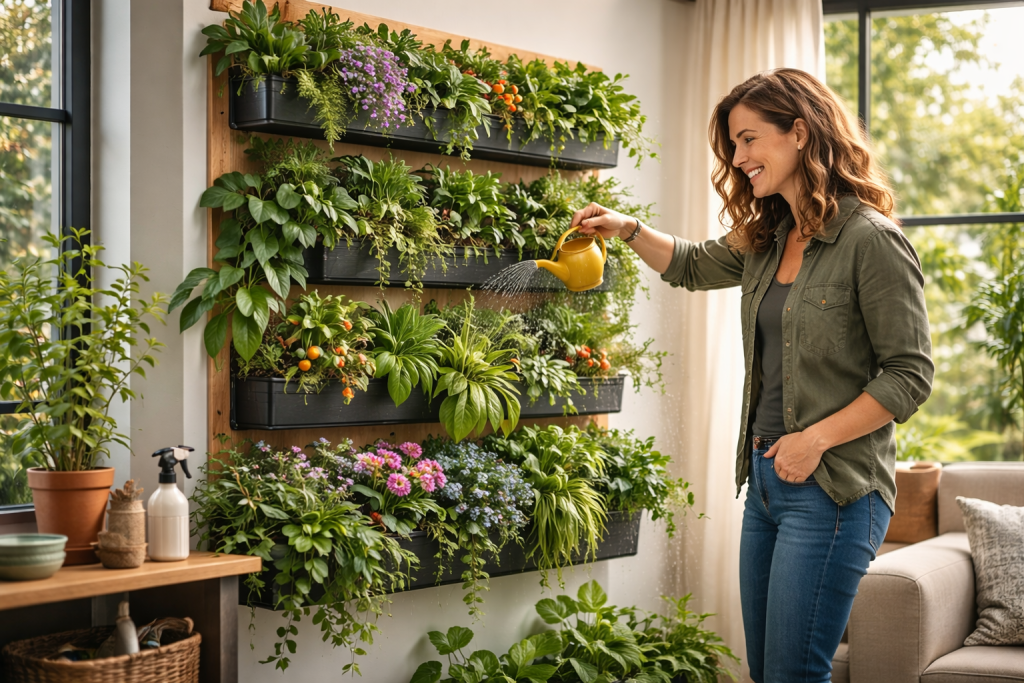
To solve this, a self-watering vertical planter system uses controlled movement, much like a closed-loop fountain. Modern setups rely on integrated drip irrigation for green walls—tiny tubes delivering slow, even drops across every tier. Many combine this with wicking systems, acting like gentle sponges to pull moisture from a hidden reservoir directly to the roots.

Even with smart mechanics, monitoring moisture is crucial to your garden’s survival. Watch for these quick signs of overwatering in your lowest pockets:
- Yellowing or mushy leaves on the bottom row
- A distinct, musty smell near the soil
- Water stagnating in the bottom catch-tray for days
Protecting your drywall matters just as much as hydration. Preventing mold in indoor green walls requires an “air gap”—a small breathing space between the planter and your wall to stop trapped moisture. With a leak-proof foundation established, you are ready to select the right foliage for your space.
The ‘Unkillable’ Selection: Best Plants for Lush, Low-Maintenance Growth
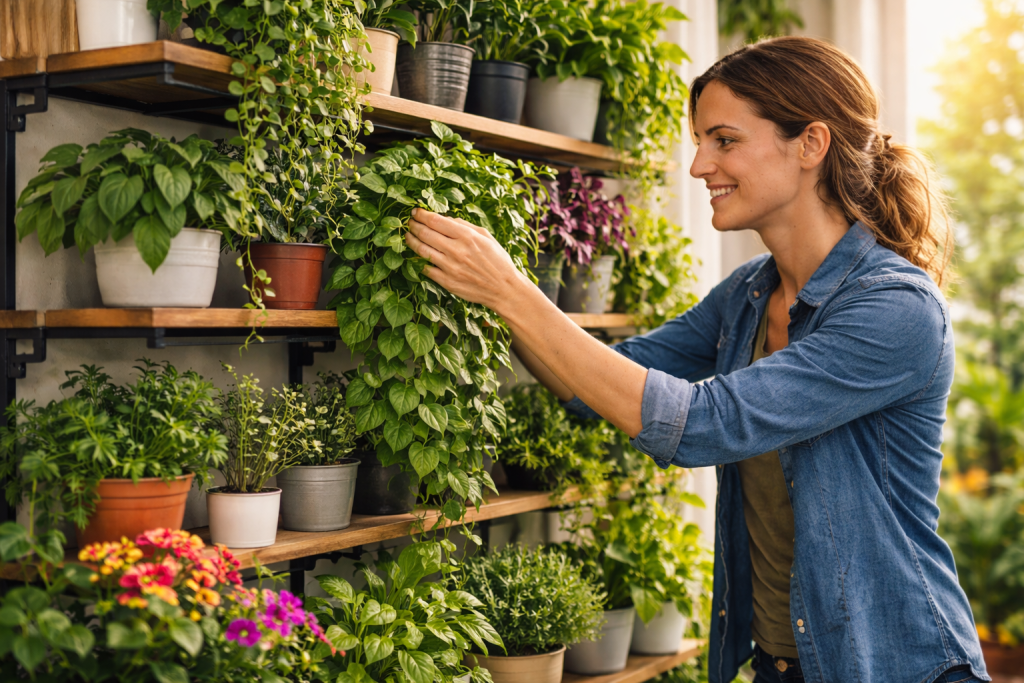
Choosing the best plants for indoor living walls is about finding species that know how to hide the hardware. The secret to a seamless indoor wall garden is selecting vines with “trailing habits.” These naturally cascade downward, quickly draping over plastic rims or felt pockets until the structural foundation disappears behind a lush curtain of green.
Before mixing foliage, you need to practice a concept landscapers call “hydro-zoning.” This simply means grouping plants with similar thirst levels together. A live vertical garden struggles if you place a moisture-loving fern beside a drought-tolerant succulent. Because gravity naturally pulls moisture down your wall, always position your thirstiest plants in the lower pockets where water tends to settle.
To guarantee your first installation thrives, stick to these unkillable selections based on your room’s available sunlight:
- Low Light: Pothos (the famously forgiving king of trailing vines) and resilient ZZ Plants.
- Medium Light: Heartleaf Philodendron and fast-growing, cascading Spider Plants.
- Bright Light: English Ivy or a fragrant, mini wall vegetable garden featuring creeping thyme.
Once your plants are tucked into their new home, the real visual magic begins. Watching these resilient species settle into their vertical environment is deeply rewarding, provided you establish a manageable care routine.
The Saturday Morning Check-In: Keeping Your Wall Lush in 15 Minutes a Week
People often ask, are living walls hard to maintain? A 15-minute weekly routine easily keeps your indoor vertical garden kit looking vibrant instead of overgrown. Start by gently wiping the broad leaves with a damp cloth. Indoor dust acts like a heavy curtain blocking out sunlight, so keeping foliage clean ensures your plants can actually absorb the light they need to survive.
Grabbing sharp scissors is your secret weapon for a truly dense, jungle-like display. Prune leggy stems just above a leaf node to force the plant to grow two new branches instead of one. While snipping, quickly peek under the leaves to spot and wipe away tiny pests before they hitch a ride across the entire wall.
Finally, feel the bottom pockets to ensure water isn’t pooling, which prevents sneaky root rot. Mastering these maintenance tips keeps your greenery effortlessly lush.
From Blank Wall to Living Masterpiece: Your 30-Day Success Roadmap
You began this journey admiring photos, but you are now equipped to build your own indoor vertical garden. The watering mechanics and structural requirements are no longer a mystery. You possess the practical knowledge to transform an empty space into a thriving indoor ecosystem.
Approach your new green wall with a simple timeline: secure your hardware in week one, add resilient plants in week two, and monitor moisture in week three. Through this consistent effort, you will easily scale your skills from one small kit to a fully realized, breathing vertical garden.