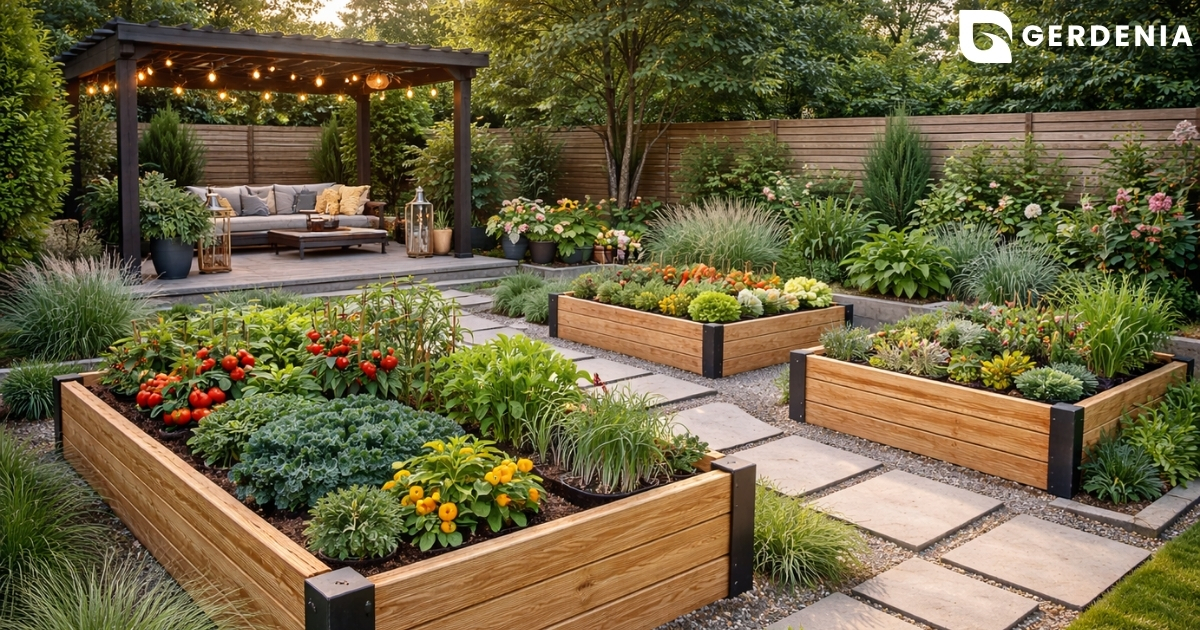
Imagine stepping out your back door and trading busy streets for the gentle splash of a mountain stream. According to landscape designers, this psycho-acoustic benefit—known as acoustic masking—works by masking neighborhood traffic noise with moving water to simulate deep nature. Backyards with fountains instantly feel like private sanctuaries.
Adding a water feature is rarely the massive renovation people expect. Transforming an empty corner or a boring patio with a landscape fountain creates a stunning focal point in just one weekend.
Modern designs rely on plug-and-play recirculating water systems, operating much like a simple aquarium filter. Just fill the hidden reservoir with a garden hose and plug the cord into a standard outlet to start your relaxing oasis.

The Best Fountain for Your Layout: Tiered Pedestals vs. Wall-Mounted Spouts
Choosing landscaping garden fountains requires matching the unit’s physical footprint and acoustic “voice” to your yard. A booming splash might mask street traffic, but it can easily overpower a quiet patio.
Knowing how water behaves helps identify the best placement for a focal point water element:
- Tiered Pedestals: Ideal for open lawns, providing 360-degree sound. They create a wide “splash zone”—the area where wind blows falling droplets—so keep them away from dry seating areas.
- Wall-Mounted Spouts: Tucking neatly against existing fences, these keep the splash zone tight and the sound gentle, making them perfect for compact spaces.
Beyond choosing between tiered pedestals and wall-mounted spouts, you must consider the ground underneath. Think of a landscape fountain like a heavy household appliance; it relies on a safe “weight-to-surface ratio.” A heavy cast-stone feature will sink unevenly into soft topsoil over time, requiring a flat concrete paver or compacted gravel base to distribute that intense load safely across a wider surface.
Even with proper foundations, traditional basins occasionally demand too much room. If you love the idea of moving water but have practically zero square footage to spare, it is time to look at solving the small-space dilemma with vertical water walls and bubblers.
Solving the Small-Space Dilemma with Vertical Water Walls and Bubblers
Not every yard has room for a sweeping centerpiece, making vertical water walls a brilliant strategy for transforming small patios. Instead of shooting water outward, these tall features let a gentle sheet glide down a flat surface. This slim profile brings small gardens with fountains to life on tight balconies without eating up valuable walkway space.
For families prioritizing safety, minimalist bubblers paired with a “pondless” reservoir offer total peace of mind. Think of a pondless setup like a coffee maker’s hidden tank: water simply disappears through decorative gravel into a buried basin. A key benefit of a pondless setup is that without an exposed pool, drowning risks for toddlers vanish and algae struggles to grow.
Alternatively, attracting songbirds with shallow garden baths creates a lively, interactive focal point. Birds avoid deep water, preferring gentle trickles over shallow stones to safely splash and drink. Whether you choose a bird-friendly dish or a sleek vertical wall, keeping that water moving requires hidden mechanics. To keep everything flowing beautifully, you must start navigating the technical side: solar efficiency and pump flow rates.

Navigating the Technical Side: Solar Efficiency and Pump Flow Rates
Powering your new focal point is surprisingly simple. A standard outdoor outlet is usually all you need, since a recirculating pump’s energy consumption and efficiency rivals a small household lightbulb—even when running 24/7. If hiding electrical cords sounds like a hassle, low-maintenance solar-powered water features work perfectly, provided your chosen spot gets at least six hours of direct sunlight daily.
Inside the basin sits a hidden submersible pump that pushes the water upward. You will often see its power rated in GPH (Gallons Per Hour). Similar to a basic aquarium filter, a higher GPH creates a vigorous splash, while a lower rating provides a gentle hum. Choosing the right pump flow rate prevents your calming fountain from acting like a bursting fire hydrant.
To size your equipment correctly, use this straightforward strategy:
- Measure the “head height” (the vertical distance from the resting water surface to the top spout).
- Target roughly 100 GPH for every foot of vertical lift.
- Select a model with an adjustable flow valve to easily dial in the perfect sound.
Getting the water moving efficiently is just the beginning of your backyard oasis. Once the mechanics are happily humming along, you will need to focus on simple algae prevention and winter protection.
Keeping the Magic Alive: Simple Algae Prevention and Winter Protection
Nothing ruins a relaxing backyard vibe quite like “green water.” Fortunately, preventing algae growth in stone basins requires just a simple “Drop a Week” routine. Similar to adding water conditioner to a home fish tank, squeezing a single drop of pet-safe liquid algaecide into the moving water keeps it crystal clear without harming visiting birds.
When autumn arrives, focus shifts toward winterizing outdoor aquatic decor for freezing temperatures. This three-step process protects your investment: simply drain the water, bring the pump indoors, and cover the empty basin. Your material dictates the required effort; a quick comparison reveals that fiberglass handles hard freezes effortlessly, while heavy cast stone and concrete need tight covers to stop ice expansion.
Even with great care, minor cracks sometimes happen, but fixing common leaks in concrete reservoirs takes just a dab of basic marine-grade sealant. With these low-effort upkeep habits mastered, you are fully prepared for the final steps to your garden oasis: placement and implementation.

Final Steps to Your Garden Oasis: Placement and Implementation
You no longer need a landscaping crew to transform your space. By nailing down three basic decisions—power, placement, and style—you are ready to start small. Before plugging anything in, execute a dry run to finalize the best location for maximum sensory impact and refine your water fountain landscaping ideas.
When exploring hardscaping ideas for integrating garden focal points, measure your success using “The Afternoon Coffee Test.” If you can sit nearby enjoying the soothing splash without straining to hear your thoughts, you have succeeded. Your backyard is now your personal, peaceful retreat.